Monday, November 27, 2006

Crave Human Sound

“it's on a station i always listen to, Minn. Public Radio, not b/c it's such a great station but b/c i crave the sound of the human voice in conversation.” (Maria Damon, Nomad Ink)

Because I am doing things other than reading, more often NPR stays on as background. From the kitchen (where I am doing things other than reading) it’s not even really audible, just delivers the sonic shape of people talking.

Poetry won’t work: tried Leonard Schwartz’s Cross-Cultural Poetics, Rod Smith’s terrific Fear the Sky, they ask for too much deep. Knowing it’s repeatable makes it less disposable: seems wrong to waste their words on shape.

Once thought to rue the day talk radio beat out music or poesy--so 'grown-up'. Now come to see the scarcity (having to do things other than reading) of the shape of people just speaking.

Wednesday, November 22, 2006

Autumn in Paris/Total Celebrity

Paris Hilton: celebrity cipher or limit case that reveals fame's basic structure?

Britney's all gospel of work (those abs!); Aguilera the myth of talent (those pipes!); Idol/Top Model drips with American self-actualization (believe in yourself and hold onto your dreams.)

Paris—already rich, effortlessly thin, and free of discernible talent—detaches success from the usual narratives that give it meaning. Celebrity Paris-style exists in its pure state, “total celebrity”, like those pure poetries where syntax gets to be just syntax, grammar grammar, without the usual “justificatory” props that give them social purpose.

There’s something about the Paris phenomenon that mirrors the conditions of success in America 2.0 (a lot like the earlier military/industrial version but with twice the profit for half the people.) Overfilling a role can serve the same function as deconstructing it. Or can it? This is a post about poetry.

Tuesday, November 21, 2006

Fine Lines

Spotted today on the MAX train: one of Portland's 'Poetry in Motion' placards with a poem by Alison Luterman called "I Confess." The small print says it was chosen by Lee Ann Brown as winner of the Olay® Total Effects Fine Lines Poetry Contest.

Did you know there was such a thing as an Olay® Total Effects Fine Lines Poetry Contest?

"The word verse derives from the Latin word for how a plow turns as it makes furrows—that is, the labor of making lines."

There's something perverse but also kind of wonderful in the idea of an ad exec connecting the ability to create fine lines with the desire to erase them.

Monday, November 20, 2006

The Shadows Know

How far civilization's gone with a sneer and a pompadour.

Thursday, November 16, 2006

Go South


Modern Americans,

Amanda Davidson, Steven Vincent and I will be reading in San Francisco this Saturday for the Artifact series, one of the City's warmest. It'll be my first Bay Area reading as an out-of-towner, sure to be notable for a helluva lot more than that.

Saturday, November 18, 7:30 p.m. (reading begins at 8 p.m.)
with Amanda Davidson, Stephen Vincent
ARTIFACT POETRY SERIES
San Francisco

Wednesday, November 15, 2006

Deviant Propulsion

As if anyone needed another reason to love CA Conrad:

OPEN LETTER TO JOHN BARR, PRESIDENT OF THE POETRY FOUNDATION

Barr's recent remarks on the state of US poetry are yet another reason (if anyone needed another reason) to see the Lilly endowment as the cultural analogue of Halliburton fixed-fee contracts in Iraq.

Tuesday, November 14, 2006

I Am Formica

Memory as a function of film stock: how even the most specific, individuating features of a past--aunts lined up on a lime green couch, mom in her macrame poncho, gold-flecked formica kitchen table--come to seem interchangeable with those of anyone else about your age whose parents used the same Kodak.

Or music: that momement when your most formative bands, the ones you would have killed for, resolve into "early '80s", same Rolands and big drum sound, now a digital patch ("tube amp") in a menu of effects options.

Awareness of color as position on a palette.

Thursday, November 09, 2006

From the Vaults


Jack Kimball with a reading report from Providence (thanks Jack). Also saw Michael Gizzi, who runs the Downcity series with Mike Magee, which made me want to re-post this, from about a year ago when I filled in on Kasey's blog, same week we moved from Noe Valley to Glen Park, which turned out to be the prelude to Portland.

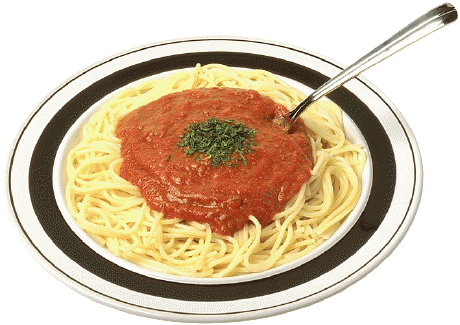
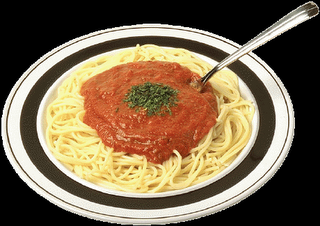
PASTA A LA GIZZI

I’m in the middle of a name shift—KONE-uh-key to KER-ne-kuh. Lesley thinks the German pronunciation sounds better and she wants our son to have it. She’s a pro at these things, having swung her own family, Poirier, single-handedly from POOR-ee-er to PWOR-ee-ay.

I remember noticing as a kid how all the famous poets I could think of had these rich English-sounding names--Wordsworth, Byron, Berryman, Dickinson, Lowell, er, Rich. I tried hard to like Roethke for no other reason than that he had an “oe” and “ke” in his name, which I’m still not sure how to pronounce. Same with Koethe. Rhymes with Goethe?

The first real literary concentration of what I guess you’d call ‘ethnic’ names I ever saw was in the Donald Allen New American Poetry anthology, where O’Haras, Duncans, Gleasons, Olsons, Blackburns, Adamses, Williamses and Guests shared pride of place with Levertovs, Eigners, Meltzers, Lamantias, Loewinsohns, Wienerses and Kochs. I wonder for how many people in the ‘60s--and even now--the special promise and threat of that collection began with the Table of Contents.

But the top spot on my list of all-time-favorite poets’ names goes to Michael Gizzi. Like his poetry, it’s fun to just say out loud. I’d like to know how much those double ‘zz’s flanked by the goofy ‘i’s drive his poetic practice, where neologisms and hinky slang and improbable made-up proper names get to buzz like they haven’t since be-bop (Klackoveesedstene!)

Last month I found his Just Like a Real Italian Kid in the SPD archives, which is like finding a sliver from the True Cross in that warehouse at the end of Raiders of the Lost Ark. It’s an amazing little chapbook that in 20 short pages manages to connect the jazzy, slangy, fun-just-to-say-it wordplay of his other books to the voicings and rhythms of immigrant Italian English:

“Stazzit! Mangare! Horizontal wicks of fennel breath crisscross dinner board to lodge in prepubescent mustachio. Yuk! how can you eat that shit? Perpetual smiles of grief-striken gumbare.”

The snappy rush of these 14 short pieces makes an implicit argument for the pleasures of English as an *almost* second language, a tongue that still feels new enough to stick out and twist at the neighbors. But Gizzi’s also a serious recorder, out to get down the echoes of the “latinate herb breathy ‘come sei bello ragazzo’ litany” before the onset of “primness on Lake Amnesia,” where everything ethnic sinks and goes white:

“Edison it was said had invented the phonograph to capture Caruso for posterity, that catch in the throat when he cried about being so much emotion trapped in the garb of a clown. That essence is Italian pressed into an essence of plastic come to mean maudlin. Those Pavlovian platters were tear-jerkers sure to make a paesan let his hair and everything else down.”

Wunderschön.

Wednesday, November 08, 2006

Contra Dicta

How is it that I ever stopped going to Nick Piombino's blog? Bad I.

Nick's Contradicta--a winning set of micro-meditations on the interpersonal ethics of making art--condense what was most distinctive about his blog in the days when his good sense and kindness cooled many a flame meme. Nick's aphorisms are more general and abstract now, like pictures from an observation balloon that permit a view of the topography all the blurred little trees occur in below.

Factory School is due to publish a selection of writings from Nick's blog as a book in its Heretical Texts series next year. Nick's committment to blogs as a major force for change in American poetry has always come with a willingness to push the form. He was one of the first bloggers I know of to interleaf his posts with excerpts from old notebooks, carefully chosen to skew the linear sense of time the blog template enforces. (I wonder if the unapologetic "I" that organizes most blogs is a function of the same template feature.)

The new direction of his Contradicta, and the forthcoming "translation" from blog to book, got me thinking about the unique thing that makes blogs blogs, not just online journals. What range of expression can the form accomodate? When does it make sense for a blog to cross over into book (with the risk that runs of making the blog look like a 'pre-book', one step lower on the food chain), and at what point does print kill the shimmer that made blogs so attractive in the first place?

One criticism of books online is that it's a hassle to read for long stretches at a screen. Yet maybe the main feature that distinguishes blogs from books is their length, and beyond that, the potential for endless content. I'll visit two or three dozen different blogs a day without blinking, but give me a "13 printed pages" Jacket essay, or a 20-page PDF of poems, and I'm out.

It's not just the screen, it's the rhythm of reading you get used to online, where there's always an awareness of OTHER INSTANT CONTENT pressing down on you. Hyperlink to this. Check Google for that. See Wikipedia for the history of the Chilean comic book industry referred to on p. 69. Online, the white space talks, like reading Ulysses with James Joyce over your shoulder to annotate the margins in real time.

One consequence is that poetry as it's conventionally read and received doesn't really cut it on blogs. The slower rhythm imposed by the silent page feels wrong on the Web. Nick's thoughtful Contradicta feel to me like they're evoking a page around them, trying to see if you can conjure the condensare of the aphorism online, where content wants to sprawl.

When Pompeii went down, the ash was so fine that it preserved, unbroken and whole, a single egg.

Friday, November 03, 2006

Go East


Catching the red eye east tonight for readings in New York and Providence. Hope you east coast-dwelling modern american types can come.

SAT., NOVEMBER 4, 7 p.m.
with Katie Degentesh
MAMA'S BAR
34 Avenue B
NY, NY

MONDAY, NOVEMBER 6, 7 p.m.
with David Trinidad
DOWNCITY POETRY SERIES
Tazza Cafe, 250 Westminster
Providence, RI

Thursday, November 02, 2006

Garrulous Ginsberg

Two recent articles on Ginsberg Ron Silliman links to remind me how much the Beat movement was about talking, writing as transcribing of talking, talk itself—that intensely personal and potentially self-absorbed bond–as holy. Kerouac’s transcription of the Cassady tape in Visions of Cody. Ginsberg “acknowledg[ing] every person who approached him on the street,” stopping to explain Whitman on electricity to a student while the Hopkins greybeards wait. Talk vs. prairie/immigrant loneliness.

Wednesday, November 01, 2006

Stumptown Racers

Sullivan! LRSN! Amanda Davidson! Get your poetic illustratin' derrieres up to Portland next year ...

STUMPTOWN COMICS FEST '06

Friday, October 13, 2006

Amazonia

Big thanks to everyone who came out to the release party for Musee Mechanique last night at Modern Times. True Modern Americans.

One of the best treats of the night was to find this review when I got home (scroll down), from Amazon reviewer #133.

Thursday, September 28, 2006

Go North

Dear Modern Americans,

Since I'll be moving to Portland, OR in a few weeks, and since none of us has posted for a while, thought I'd convert "Modern Americans" from a group blog to an unabashed puff piece for Portland, where I hope to convince a lot of Bay Area poets to move. Check in now and then--we'll try to get a Flickr page going too.

In the meantime, a brief announcement:

BOOK LAUNCH for MUSEE MECHANIQUE
THURSDAY, OCTOBER 12 @ 7:30 p.m.

Modern Times Bookstore
888 Valencia Street (bet. 19th and 20th)
San Francisco

http://www.ecstaticmonkey.com/events.htm
http://www.mtbs.com/events.html

This'll be my last reading as a Bay Area poet. Hope you can come out!

Monday, May 08, 2006

Rodney Koeneke's Musee Mechanique


Friends, Romans, Countrymen,

I’ve written a book. I've found someone to publish it. It’s for sale here. I hope you'll consider getting it.

Want to look before you leap? Sample wares here or here. Video available here.

Read more about flarf, the controversial poetry movement my book is a part of.

Many thanks for supporting my work!(and special thanks to Gary Sullivan for the cover.)

xo Rodney Koeneke

Class Poem at Cato's

Below is our class poem composed at Cato's in the style of the New York School (you can fill out an online application here). I've titled it, hopefully appropriately, in the whimsey of Ashbery.

"We Came for the Catatoes"

I'm going to go to a San Francisco game on Tuesday.
Rivers and mountains rose golden in color & depressing in form,
Wood worn in fingers and ale-scents of meat --
Once belived you'd never be independent.

Wheel, wheel

wheel, headlight x2, wooden red table
Someone gonna gimme their seat?
Rodney is short and Jeff sober.

Chain links steam inviolable indesolate...
You once fell into something resembling falling,
You.


Monday, May 01, 2006

John Ashbery & Frank O'Hara


Check out the brief bios for John Ashbery (left pic) and Frank O'Hara (right pic).

Given the short timeframe, we will be presenting an overview of John Ashbery and Frank O'Hara in relation to the New York School of poets and doing a close reading of a couple of their works. Be sure to read O'Hara's "Why I am not a Painter" (in your texts) and Asbhery's "The Painter" pasted here:

Listen to Ashbery read stuff.

The Painter

Sitting between the sea and the buildings
He enjoyed painting the sea's portrait.
But just as children imagine a prayer
Is merely silence, he expected his subject
To rush up the sand, and, seizing a brush,
Plaster its own portrait on the canvas.

So there was never any paint on his canvas
Until the people who lived in the buildings
Put him to work: "Try using the brush
As a means to an end. Select, for a portrait,
Something less angry and large, and more subject
To a painter's moods, or, perhaps, to a prayer."

How could he explain to them his prayer
That nature, not art, might usurp the canvas?
He chose his wife for a new subject,
Making her vast, like ruined buildings,
As it forgetting itself, the portrait
Had expressed itself without a brush.

Slightly encouraged, he dipped his brush
In the sea, murmuring a heartfelt prayer:
"My soul, when I paint this next portrait
Let it be you who wrecks the canvas."
The news spread like wildfire through the building'
He had gone back to the sea for his subject.

Imagine a painter crucified by his subject!
Too exhausted even to lift his brush,
He provoked some artists leaning from the buildings
To malicious mirth: "We haven't a prayer
Now, of putting ourselves on canvas,
Or getting the sea to sit for a portrait!"

Others declared it a self-portrait.
Finally all indications of a subject
Began to fade, leaving the canvas
Perfectly white. He put down the brush.
At once a howl, that was also a prayer,
Arose from the overcrowded buildings.

They tossed him, the portrait, from the tallest of the buildings;
And the sea devoured the canvas and the brush
As though his subject had decided to remain a prayer.

- John Ashbery from Some Trees (1956)


Emily & Anna