Wednesday, May 19, 2010

Spring Anniversaries

It’s raining poetry anniversaries in Portland this spring. If Not For Kidnap marked the first year of its music-meets-poetry house series at the end of April; Loggernaut followed suit with a 5th-anniversary reading in early May; the Spare Room collective, which celebrated its 100th reading in January of last year, hit eight years of steady service this March; while Tangent, a more occasional affair, crossed the 4-year line this month. Throw in the Smorg, which launched in April 2008, and that’s two decades’ worth of series packed into an 8-year interval since 2002. (So as not to produce a misleading skew of the data, I’m bracketing out the 1,001 poetry activities of the redoubtable Dan Raphael.)

Aside from revealing that Portlanders like to launch things in the spring (you’ve maybe heard it sometimes rains here), the numbers point to a hopeful uptick in local poetry capacity. Though add up their ages and they still fit cozily inside the lifespan of, say, a Small Press Traffic, which celebrated its 30th birthday in 2004 with a bill of readers all born the same year the series was. Which feeds my sense of Portland as a baby Bay Area, or a Midwest that’s fallen in with glitzy older company. Check back in 2032 for a glamour vs. House Price Index update.

Monday, May 17, 2010

Intro for Chris Nealon, Portland, 5/15/10

Rumors of the death of the poet-critic have been greatly exaggerated, and Chris Nealon’s here tonight as living proof. They make nice across the hyphen, that “poet” and “critic,” but often the join conceals a hostile standoff. In one corner there’s the poet, all subjectivity and trill; in the other, the Parnassian pro, dispassionately assessing the field.

Once upon a time, good poet-critics smoothed the rift by drinking. Chris, I think, provides a healthier alternative. Across his critically informed poetry and poetically shapely criticism, he’s found a way to put his lefty-right brain to work on two sides of the same theme: the fizz that occurs when you drop a stray self into history.

It’s a sharp, capacious, burning sort of remedy. The self in his equation can be anyone from Hart Crane to “Alanis’s ex-boyfriend”; the historical surround can be ’50s muscle mags or plummeting derivatives markets. Along the way there’s space made for Seleucids, Olivettis, Walkmans, JiffyLubes, Israelites, Tyvek and Lukacs; Art Song and techno; Marxist smarts and “pure despair.” To re-purpose a line from Yeats:

O poet swayed to music, O critic’s glance,
How can you be the disco and the dance?

Open your notebooks and prepare to learn from the many-minded Chris Nealon.

Friday, May 14, 2010

Chris Nealon & Sam Lohmann read in Portland this Sat. for Tangent

Chris Nealon, one of my favorite poet-critics, furloughs from D.C. to read in Portland tomorrow with one of my favorite poet-editors, Sam Lohmann. I predict a “your chocolate in my peanut butter” kind of experience it’d be sinful to miss.
Tangent presents
CHRIS NEALON & SAM LOHMANN
w/ films by T’CHAKA ANGHELOS SIKELIANOS
7 PM Clinton Corner Cafe, 2633 SE 21st Ave. (@ Clinton) Portland, OR

CHRIS NEALON grew up in Binghamton, NY, and moved out west in the mid-90s, where he taught at UC Berkeley for about 15 years. He recently moved back east, and teaches in the English Department at Johns Hopkins. He’s the author of two books of poems, The Joyous Age and Plummet, as well as two books of literary criticism: Foundlings: Lesbian and Gay Historical Emotion before Stonewall (Duke, 2001), and the forthcoming The Matter of Capital: Poetry and Crisis in the American Century (Harvard, 2011). He lives in Washington, DC.

SAM LOHMANN lives in Portland, where he edits the poetry zine Peaches and Bats. He’s a member of the Spare Room reading series collective, and the author of several chapbooks and pamphlets, most recently Onlooking and Fluted Octaves (for nothing).

T’CHAKA ANGHELOS SIKELIANOS is a Portland-based filmmaker who has worked on a variety of feature and short film projects. He is currently at work on a graphic novel called R.O.M.E./PDX about the racial/racist history of Portland.

Monday, May 10, 2010

Dept. of Monday

Re-reading the Necronomicon while YouTubing the Phos Hilaron.

Friday, May 07, 2010

Homecoming King

The rumors have cleared & it’s official: Bruce Boone’s coming home, reading with Maryrose “Name This Intersection” Larkin this Wednesday, May 12 in Portland for Spare Room. Like Bev Dahlen, who read here almost exactly a year ago, Bruce is Portland-born but hasn’t been back for a writerly victory lap since he blew town in his teens. Dust off the pennants & brace for an I that revs like this:
“So let’s put it another way. In the normal course of things it’s the cerebellum that musters emotion. To write in order to give the reader access to heights of transport is to reverse things and to harness the intellect to the service of emotions. To elicit emotions, you need a kind of false subject that will make the reader comfortable. Traditionally it was the work of shamanism and now it’s the task of psychoanalysis to unravel that false 'I.' The work of writing is the opposite—to reconstitute this phoney 'I.'”

—from Century of Clouds

“When you tell something to someone, doesn’t it change their life forever? For me such questions bring with them a great sense of melancholy, as if in interrogating language I come that much closer to some bedrock loneliness inseparable from history itself. But perhaps I should really say prehistory—since I don’t believe that these foreclosures are fated to remain forever. And what does narrative open up into, if not human love, called into existence for the first time.”

—from My Walk With Bob

Thursday, May 06, 2010

Dick Davis's Shahnameh

Dick Davis’s English is the closest I’ll ever get to the Persian of Ferdowsi’s famous epic, a multi-volume poem condensed here into a version that leavens the inevitable tedium of the chronicle with a string of well-realized vignettes related in supple, vivid prose, with the occasional rhyming stanza for more festive or elevated moments. In Davis’s translation, each of Ferdowsi’s many kings and heroes miraculously stays distinct, and you get enough of each story—especially the famous Rostam’s—to gain a feel for the aesthetic predilections of classical Persian poetry: the jewels spilling from goblets, the kingly demons, the cypress-slim heroes and raven-haired princesses, the splendiferous banquets, thwarted loves, and shah after shah handing on the regal glow of his farr. Undercutting the bling is Ferdowsi’s insistent warning that glory’s born to fade, and that death meets us all when the wine cup’s dry; a little sour pathos to season the narrative sweet.

For historians, the Shahnameh is a rare window onto pre-Islamic Persia, as Ferdowsi carefully marshalled the legends and folktales that were diplomatically forgotten at the glittering Muslim courts:
“No one has any knowledge of those first days, unless he has heard tales passed down from father to son.” Ferdowsi, who ended his days (and this volume) lamenting how little his efforts brought him, found a way to be distinctly Persian but still a sound Muslim, and his work lives on in the plots of a thousand and one Bollywood films, as well as in this effective translation by the man Penguin’s backflap doesn’t balk to call “the greatest translator of Persian poetry.”

Tuesday, May 04, 2010

Imperial Peach

Treat yourself and click through immediately to Trane DeVore’s great reading of an extraordinary Japanese jazz/scat rendering of the Momotaro (“Peach Boy”) folk tale. Monk and Mingus never looked so imperially ambiguous. Danke, Trane.

Monday, May 03, 2010

Duncan is Jandek

Nice writeup from poet James Yeary on the radium-rare Jandek appearance in Portland last week with, um ... what’s the name of that guy who was in Sonic Youth? Apparently, both go well with vegan nachos & Robert Duncan. Seems like everything goes well with Robert Duncan these days. Robert Duncan: the Jandek of postmodern American poetry? (With Spicer his Thurston Moore?)

Saturday, May 01, 2010

Friday, April 30, 2010

Loggernaut Is Five

Portland’s Loggernaut Reading Series pivots on its first five years and turns to face the next with a group reading tomorrow, May 1. Congrats to Jesse Lichtenstein & Erin Ergenbright for keeping the log rolling that long.
SATURDAY, MAY 1
Loggernaut 5th Anniversary Party w/ readings by:
CHELSEY JOHNSON, RODNEY KOENEKE, BARRY SANDERS & MARY SZYBIST
7:30 PM, Urban Grind, 2214 NE Oregon St.
Portland, OR

Wednesday, April 28, 2010

Antidote For Janacek

“Dear Hubble,

Your telescope has been very, very successful. It has taken a lot of stunning pictures of space. Your telescope has been right in my heart. I love the way it’s shaped. I love the way it’s built. And, especially, I love how long it can transport pictures. Your telescope means a lot to me. I’m sure it took many years to build it, and it is very precious to you, and to me.”

Monday, April 26, 2010

Dept. of Monday (Janacek Blogger Edit)

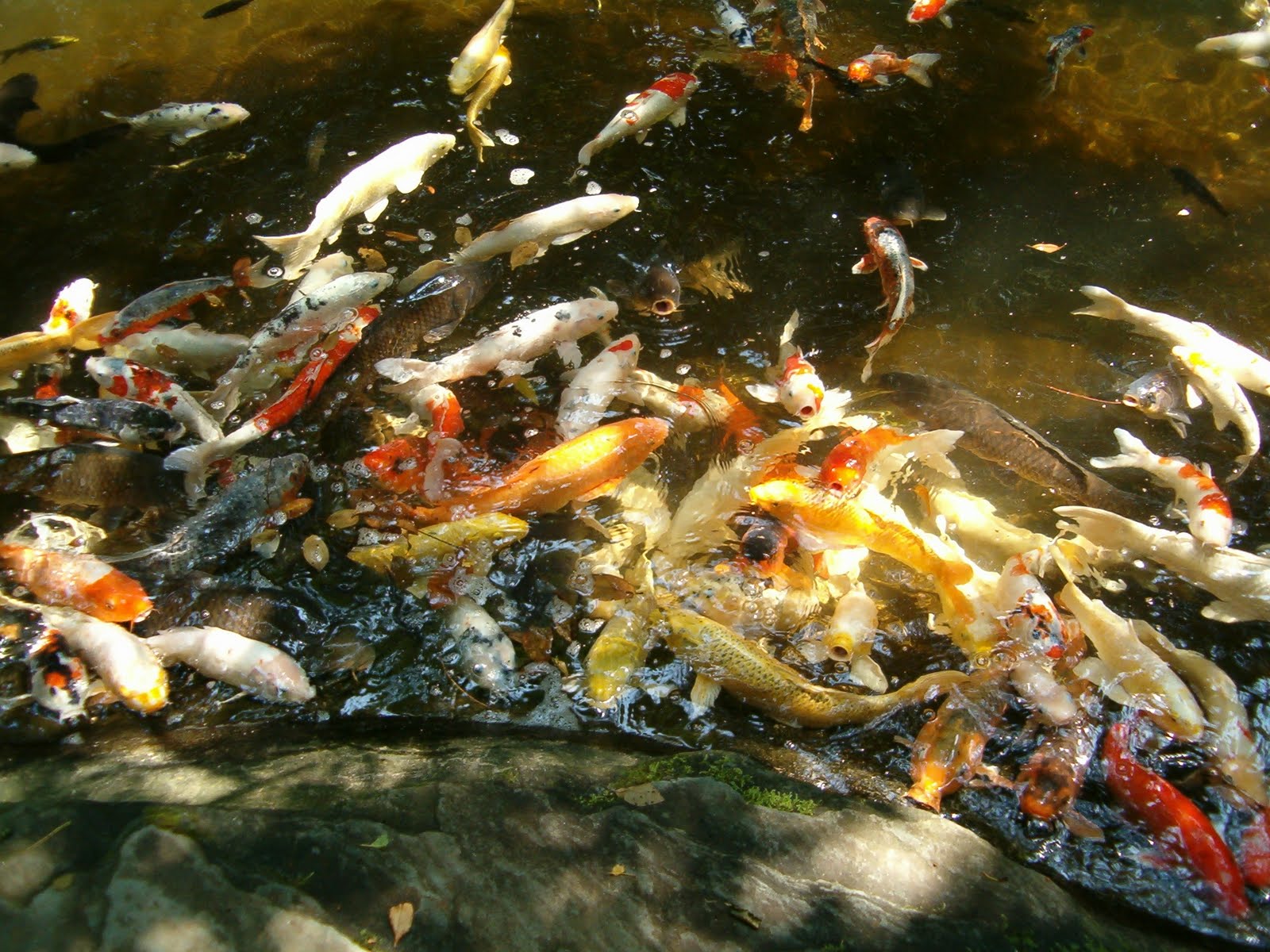
"We’re like little carp in stagnant water. This stagnant water, this is just our correspondence. But one day we’ll thrash so much in that water that it will froth up and we’ll fling ourselves over the dam wall!"

—Leos Janacek to Kamila Stosslova, 13 November 1927 (trans. John Tyrrell)

Thursday, April 22, 2010

Monday, April 19, 2010

David Young's Petrarch

Poets like Petrarch, who lived in times that savored technical virtuosity and skill at fulfilling strict formal rules more highly than our own does, can suffer badly in modern translations. They’re often either brought over into contemporary blank verse, or straitjacketed into meters and rhyme schemes that are dead to modern ears.

David Young’s translations of the
Canzoniere—all 366 of 'em—are remarkable for the way they succeed at combing Petrarch’s medieval Italian into direct demotic English that also approximates the shapely, measured elegance of the form for which he’s famous. Young creates the effect by putting caesuras where the rhymes ought to be, so that you get a feeling of completion at the ends of lines without disrupting the push into the next syntactic unit. The result is that meaning slops freely, almost conversationally, across the sentences while the individual lines preserve a sense of being elevated and formally “wrought.” It might be this combination of colloquial intimacy and technical brio that accounts for the longevity of the Petrarchan sonnet, the most familiar form to survive the Renaissance. Young sheds light on that, too, arguing for Petrarch’s Canzoniere as a sequence as deliberate and epistemologically sharp as Dante’s Commedia, but one that approaches the question of how to narrate the progress of a self through time in a more modern way, relying on echoes, resonances, and readerly inference rather than architectural rigor.

The notes are also helpful and unobtrusive, without a lot of scholarly chrome and fenders, and not a footnote in sight. A great introduction to Petrarch’s under-read achievement.

Thursday, April 15, 2010

Arnold J. Kemp & David Buuck in Portland, 4/10/10

I’m feeling a little like Nada’s feeling about reportage these days; that if you don’t say something, however inadequate, time’s U-pipe gets the better of our fleeting ululations. I’ve fallen out of the habit of writing down lines at readings, so no anchor to my impression that the Kemp/Buuck reading for Tangent on Saturday was one of the best in recent memory. Kemp’s delivery was as disarming as the poems, which were “about” friendship and affection and “double consciousnesses” and coyly initialed socio-aesthetic filiations in a way that had me thinking of O’Hara for no good reason except they were so immediately pleasurable. He also managed to pack the place with students, colleagues, and well-wishers who embodied some of the interpersonal energies celebrated in the poems. Kemp’s here for the painters, but I hope he’ll do time with the poets now he’s in town.


David Buuck, a close friend of Kemp’s, kept the night rolling with a performance of “The Jhoke” section in The Shunt, a piece built from puns on the venerable “man walks into a bar” routine, which he launched by literally walking into the bar, shuffling down its edges, exiting, re-entering, draping himself on a barstool, dropping to the floor, and finally crawling his way back to the mike, keeping up all the while a stuttery patter that circled around poetry and citizenry in wartime. After that, he asked an audience member to shuffle a set of paragraphs containing sections of an autobiography centered on a relationship he had before he became a writer. I think it’s John Freccero who argues that Dante’s Commedia is the prototype for all autobiographies written since, where the person the life describes ends up converted into the author who’s currently describing it, so that the real subject of every autobiography is the progress that made possible the conditions of its own writing. Buuck’s piece cannily played off that assumption, using phrasal iterations and variations on fixed bits of syntax to tweak the usual “then I was, now I am” time sense the form usually imposes, shuttling the narrative fulcrum backwards and forwards across the sequence through a kind of architectonic horseplay designed to restrain “narrative theory” from topping “narrative practice.”


Buuck’s reading had lovers bridled like horses, and Kemp’s a rabid squid nailed to someone’s face, so the night also helped firm up my feeling that the conjunction between sex, animality, and violence is somehow the secret engine behind contemporary poetry, at least the part of it I feel like writing about in abbreviated posts like these.

Monday, April 12, 2010

R (Romeo)

Laura Elrick and Rodrigo Toscano join the growing pageant of contributors to the online Previews & Supplements feature of Kenning’s Poets Theater anthology with an interview about performing Hannah Weiner’s “Romeo and Juliet.”

I wrote a short piece about Weiner
’s Code Poems, with a brief reference to the play, for the last Orono conference. Another Orono paper, one of my favorites, was Rob Halpern’s on Bob Perelman and Bruce Boone, “Restoring China.” It’s up in an expanded version at the Bob Perelman Feature (“300 printed pages”!) Kristen Gallagher just edited for Jacket.

Following all the links in this post will consume an estimated 4.5 hours of office job.

Friday, April 09, 2010

Buuck in Portland

Oakland’s own David Buuck reads for Tangent this Saturday with a pair of Portland area professors: Arnold J. Kemp, a former San Franciscan who arrived in July to helm the MFA in Visual Studies at Pacific Northwest College of Art, and Jennifer Hardacker (winningly rendered by a local weekly as “Hardpacker”), who teaches Media Arts at Pacific University Oregon. Click here for more, & lock up your lecterns.