Friday, April 30, 2010

Loggernaut Is Five

Portland’s Loggernaut Reading Series pivots on its first five years and turns to face the next with a group reading tomorrow, May 1. Congrats to Jesse Lichtenstein & Erin Ergenbright for keeping the log rolling that long.
SATURDAY, MAY 1
Loggernaut 5th Anniversary Party w/ readings by:
CHELSEY JOHNSON, RODNEY KOENEKE, BARRY SANDERS & MARY SZYBIST
7:30 PM, Urban Grind, 2214 NE Oregon St.
Portland, OR

Wednesday, April 28, 2010

Antidote For Janacek

Dear Hubble,

Your telescope has been very, very successful. It has taken a lot of stunning pictures of space. Your telescope has been right in my heart. I love the way its shaped. I love the way its built. And, especially, I love how long it can transport pictures. Your telescope means a lot to me. I’m sure it took many years to build it, and it is very precious to you, and to me.

Monday, April 26, 2010

Dept. of Monday (Janacek Blogger Edit)

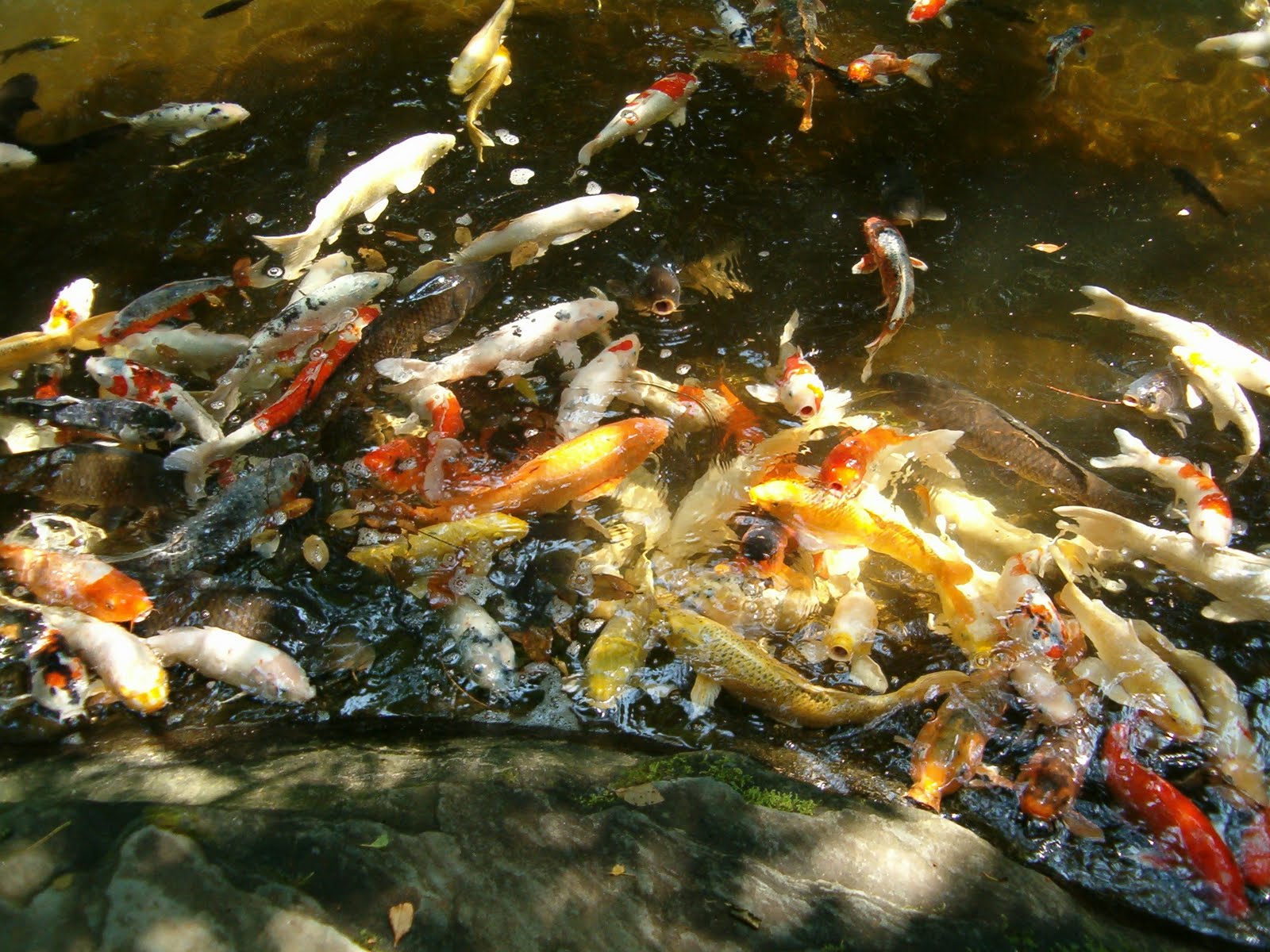
"Were like little carp in stagnant water. This stagnant water, this is just our correspondence. But one day well thrash so much in that water that it will froth up and well fling ourselves over the dam wall!"

—Leos Janacek to Kamila Stosslova, 13 November 1927 (trans. John Tyrrell)

Thursday, April 22, 2010

Monday, April 19, 2010

David Young's Petrarch

Poets like Petrarch, who lived in times that savored technical virtuosity and skill at fulfilling strict formal rules more highly than our own does, can suffer badly in modern translations. They’re often either brought over into contemporary blank verse, or straitjacketed into meters and rhyme schemes that are dead to modern ears.

David Young’s translations of the
Canzoniere—all 366 of 'em—are remarkable for the way they succeed at combing Petrarch’s medieval Italian into direct demotic English that also approximates the shapely, measured elegance of the form for which he’s famous. Young creates the effect by putting caesuras where the rhymes ought to be, so that you get a feeling of completion at the ends of lines without disrupting the push into the next syntactic unit. The result is that meaning slops freely, almost conversationally, across the sentences while the individual lines preserve a sense of being elevated and formally “wrought.” It might be this combination of colloquial intimacy and technical brio that accounts for the longevity of the Petrarchan sonnet, the most familiar form to survive the Renaissance. Young sheds light on that, too, arguing for Petrarch’s Canzoniere as a sequence as deliberate and epistemologically sharp as Dante’s Commedia, but one that approaches the question of how to narrate the progress of a self through time in a more modern way, relying on echoes, resonances, and readerly inference rather than architectural rigor.

The notes are also helpful and unobtrusive, without a lot of scholarly chrome and fenders, and not a footnote in sight. A great introduction to Petrarch’s under-read achievement.

Thursday, April 15, 2010

Arnold J. Kemp & David Buuck in Portland, 4/10/10

I’m feeling a little like Nada’s feeling about reportage these days; that if you don’t say something, however inadequate, time’s U-pipe gets the better of our fleeting ululations. I’ve fallen out of the habit of writing down lines at readings, so no anchor to my impression that the Kemp/Buuck reading for Tangent on Saturday was one of the best in recent memory. Kemp’s delivery was as disarming as the poems, which were “about” friendship and affection and “double consciousnesses” and coyly initialed socio-aesthetic filiations in a way that had me thinking of O’Hara for no good reason except they were so immediately pleasurable. He also managed to pack the place with students, colleagues, and well-wishers who embodied some of the interpersonal energies celebrated in the poems. Kemp’s here for the painters, but I hope he’ll do time with the poets now he’s in town.


David Buuck, a close friend of Kemp’s, kept the night rolling with a performance of “The Jhoke” section in The Shunt, a piece built from puns on the venerable “man walks into a bar” routine, which he launched by literally walking into the bar, shuffling down its edges, exiting, re-entering, draping himself on a barstool, dropping to the floor, and finally crawling his way back to the mike, keeping up all the while a stuttery patter that circled around poetry and citizenry in wartime. After that, he asked an audience member to shuffle a set of paragraphs containing sections of an autobiography centered on a relationship he had before he became a writer. I think it’s John Freccero who argues that Dante’s Commedia is the prototype for all autobiographies written since, where the person the life describes ends up converted into the author who’s currently describing it, so that the real subject of every autobiography is the progress that made possible the conditions of its own writing. Buuck’s piece cannily played off that assumption, using phrasal iterations and variations on fixed bits of syntax to tweak the usual then I was, now I am time sense the form usually imposes, shuttling the narrative fulcrum backwards and forwards across the sequence through a kind of architectonic horseplay designed to restrain “narrative theory” from topping “narrative practice.”


Buucks reading had lovers bridled like horses, and Kemps a rabid squid nailed to someones face, so the night also helped firm up my feeling that the conjunction between sex, animality, and violence is somehow the secret engine behind contemporary poetry, at least the part of it I feel like writing about in abbreviated posts like these.

Monday, April 12, 2010

R (Romeo)

Laura Elrick and Rodrigo Toscano join the growing pageant of contributors to the online Previews & Supplements feature of Kenning’s Poets Theater anthology with an interview about performing Hannah Weiners Romeo and Juliet.”

I wrote a short piece about Weiner
s Code Poems, with a brief reference to the play, for the last Orono conference. Another Orono paper, one of my favorites, was Rob Halperns on Bob Perelman and Bruce Boone, Restoring China. It’s up in an expanded version at the Bob Perelman Feature (300 printed pages”!) Kristen Gallagher just edited for Jacket.

Following all the links in this post will consume an estimated 4.5 hours of office job.

Friday, April 09, 2010

Buuck in Portland

Oaklands own David Buuck reads for Tangent this Saturday with a pair of Portland area professors: Arnold J. Kemp, a former San Franciscan who arrived in July to helm the MFA in Visual Studies at Pacific Northwest College of Art, and Jennifer Hardacker (winningly rendered by a local weekly as “Hardpacker”), who teaches Media Arts at Pacific University Oregon. Click here for more, & lock up your lecterns.

Monday, April 05, 2010

For Those About to Pop

Introducing ... Bodega Pop (brought to you by the makers of Elsewhere).

Wednesday, March 31, 2010

David Brazil's Spy Wednesday

Spy Wednesday is the hump day of Holy Week, smack in the middle of Christ’s Passion, but it also evokes the surveillance and identity protocols that condition dissent in our age of “intense decathexes.” The title’s a great example of Brazil’s allusive dexterity as he plays embedded reporter to himself over the course of a single week involving protest, arrest, breakups and meetups, all set to the rhythm of a witty “call & response across the segment” with Beckett, Melville, St. Paul, Patti Smith, Machiavelli, Spinoza, Lou Reed, Ranciere, and Augustine (Dylans plus Benedicts), inter alia. A real-time interrogation of “the possibilities of/meaningful intervention” under Code Yellow conditions, the poem’s also a meditation on the value of ‘the literary’ itself, in which what you read figures as a Greek chorus of comforters and told-you-so confidants, and what you write becomes “an education in what/life is when it goes otherwise—/otherwise than planned.”

Monday, March 29, 2010

Leslie Scalapino's Zither & Autobiography

Just hit 200 reviewsof poetry books on Goodreads and dont exactly know why. Partly its cheerleading, partly compulsiveness, partly the online fun of watching numbers climb. If I arrange them right, I wonder if they’d show a coherent poetics, or a map of friendships and affinities that amounts to the same thing. Ill post some here, for the few who still read blogs between Facebook updates, and who dropped away from Goodreads long ago.
Leslie Scalapino’s been on my mind a lot lately. I’ve admired the seriousness and dedication apparent in her work for years, but my mind just doesn’t work like hers. Consequently, as often happens in these cases, I’ve tended to take her sui generis explorations of time, memory, and the experience of subjectivity as prescriptive, even admonishing, like I ought to be taking in the world that way myself.

Somehow Zither & Autobiography helped get me over that hang-up. It couples a fairly accessible, straight-up narration written for Gale Research with a poetic “commentary” on the prose half that sort of writes through King Lear (“he hath ever but slenderly known himself”) to explore themes familiar from Scalapino’s other books: the slips and stutters of consciousness as it works to locate itself in the evanescent present. Together, the two contrasting texts make a diptych that highlights the strengths and limits of both approaches to narrating the story of one’s life, or even puzzling out which of the multiform pulses of consciousness count as “one’s” “life.”

The notes say that Gale rejected the prose section for being too weird, but if you’re familiar with Scalapino’s poetry, it helps to locate some of her philosophical and political commitments among her relationships within an exceptional academic family whose travels and interests inflect her heightened alertness to dislocation, the artifice of normative linguistic conventions, and Buddhistic insight. A great way in if you’re looking to get experienced with Scalapino’s work. No time like the present.

Friday, March 26, 2010

Su'al (Question)

“And many more poets … still went on halting over the abodes of their abandonment to direct to them their outpour of questions, which, indeed, was like one large, cumulative question, time after time, poem after poem.”

Jaroslav Stetkevych, “Toward an Arabic Elegaic Lexicon: The Seven Words of the Nasib

Friday, March 19, 2010

Intro for Brandon Downing, Powell’s Books, 3/14/10

Here’s the intro I gave for Brandon Downing at his Powell’s reading in Portland on Sunday.
Brandon Downing is the author of The Shirt Weapon (“You are a blue rat caught/In a black dog’s jaws”) and Dark Brandon (“Through a discount centre entryway. I come/Into piano spotlight”). He’s also the bricoleur veejay genius splicer behind “Dark Brandon/Eternal Classics,” a DVD which paradoxically convinced cyberpunk author Bruce Sterling “to pay attention to a poetry movement” again.

I don’t think we’ve had the full measure of Brandon’s genius though till now, with the coming of
Lake Antiquity. Lake Antiquity is the first book of poems I’ve seen that thanks Italian flea markets, vampire seductress comics, a famous British archaeologist, and several brands of glue stick. (He credits especially “the durable, glorious Scotch/3M Clear.”) There’s something durable and glorious about Brandon’s creations, too. He sinks a deep shaft into the cultural junk we’ve amassed and sold off, then draws up radiant artifacts from the mulch. Brandon’s “voluptuous assemblage” of text and image reminds me that all the best modern artists were wastemakers at heart, less towering Romantic creators than cheerleaders for things passed over, urging us to see the overlooked with new eyes.

Through Brandon’s, history runs like a film at 30 centuries per second; antiquity’s a Hollywood backlot of mobile exteriors; and modernity becomes an extension of chromolithography, all those thousands of mass-produced lines—poetic and otherwise—cross-hatched into something grandiloquent, personal, hilarious, lyric, novel, ingenious, and strange. I’m learning from the treasures that come up from Brandon’s lake all the time, and I hope you starbound twenty-first century types will, too. Please to welcome
Brandon Downing.

Tuesday, March 16, 2010

Intro for Macgregor Card, Powell’s Books, 3/14/10

About 45 pairs of ear turned out to hear Brandon Downing and Macgregor Card at Powell’s on Hawthorne Sunday, including those of local poets Jules Boykoff, Lisa Ciccarello, Allison Cobb, Jen Coleman, Gale Czerski, Donald Dunbar, Emily Kendal Frey, Lindsay Hill, Drew Scott Swenhaugen, Kevin Sampsell, Zachary Schomburg, and Wayne Craig Pernu of Portland lit rock act The Telling. Here’s the intro I gave for Macgregor. It missed the secret Dante/Futura font messaging Gary caught, but he did open with some Spasmodically awesome Dobbell.
Macgregor Card’s first name is Macgregor. Just stop for a second and think how cool that is. It suggests a kind of inborn gift for names, which extends to his legendary journal, The Germ—one of the last print journals to matter before print got precious and luxe—and continues with his debut full-length collection, Duties of an English Foreign Secretary, winner of the 2009 Fence Modern Poets Prize.

Besides being one of the best names for a book of poems ever, Macgregor’s title carries a whole theory of poetry in miniature. Isn’t it one of the poet’s duties to treat English like it’s foreign? To make the mother tongue feel new and strange? Shelley called poets the unacknowledged legislators of the world, but I’m inclined to Macgregor’s view that they’re more secretary than CEO, transcribing the minutes that get into the file marked History.

Many of the poems are made from lines Macgregor’s exchanged over the years with the poet
Karen Weiser, so there’s an element of correspondence, too—poetry as a product of friendship and social exchange. And the fact that the title’s borrowed from Sydney Dobbell, an obscure Victorian Spasmodic, points to a certain light-handed responsibility to the past—poet as rememberer and recoverer, amnesia’s wordy enemy. People, do your duty to la lengua and please join me in welcoming Macgregor Card.

Thursday, March 11, 2010

"Brandon Downing Is Some Kind of Genius..."

…says The Stranger, and he’s hauling the braincase to Portland for two prismatic displays. First, in celluloid form this Saturday, 3/13 with Vancouver BC-ite Reg Johanson & locally grown Jake Buffy for Tangent, then again at Powell’s on Hawthorne Sunday at 4 PM, where he reads from his new Fence book with his traveling partner in crime, Macgregor Card. It’s a one-stop shot to get your Lake Antiquity and Duties of an English Foreign Secretary from the hands of the genii who wrote them.

Monday, March 01, 2010

Thursday, February 18, 2010

Genghis Blues

“In the eyes of a Mongol they look at themselves like conquerors of the known world, and people around them or under their rule despise them.”

Thursday, January 28, 2010

Reader's Block

An occasional co-sufferer, I appreciate Chris Vitiello’s description of his recent reader’s block. Random sample:
is it all butt-sniffing? like, i am showing you my level of craft, and my level of being able to recognize your craft, so that i am legitimized in this context that we are now wrapping around ourselves
Catching up with the whole Delay experience, which it turns out I’d failed to update in my blog roll when it moved, has been a pleasure. New Year’s Resolution: keep up with The Delay. And ride more trains. (Spot the pun.)