Thursday, May 08, 2008

The New Talkies in Portland, 5/3/08: Solaris

Around the same time that Andrei Tarkovsky was planning his cinematic riposte to Stanley Kubrik’s 2001: A Space Odyssey, a former telephone cable layer named Venedikt Erofeyev was struggling to publish Moscow to the End of the Line, the prose poetic odyssey of a heavily boozed telephone cable layer on a train ride from the capital to the outlying town of Petushki. David Abel & Leo Daedalus created a multilayered commentary on narrative, meaning, spiritual longing, and political oppression by brilliantly speaking Erofeyev’s lines through a key character in Tarkovsky’s film.

The scene they chose was appropriately one of the most “down to earth” in Solaris: the “film within a film within a film” where Kris Kelvin watches old footage of Berton, the cosmonaut who preceded him into space some years earlier, being interrogated by a panel of scientists curious to determine the truth of what he saw. The footage is black-and-white, and the examination room is hung with giant posters of figures resembling Lenin and Marx. It’s hard not to read into the scene Tarkovsky’s frustration with Soviet censorship, and Berton’s nervous hesitations in the face of the experts’ questions bore a strong resemblance to Larkin’s Joan of Arc. In both pieces, the presumption of truth came off as a means to bludgeon the different into compliance, while uncertainty, aporia, and doubt became heroic.

Leo Daedalus gave a hilarious range of voices to Berton’s interrogators, who began by declaring themselves members of an unnamed “Institute” that aims to make sure films are “good, but not too good.” They’ve called in Berton as a dialogue specialist to dumb down some of their recent product and confirm that the scripts are orthodox. But once Berton begins talking, out comes a rambling catalog of drinks and misdirections as Erofeyev’s narrator details an inebriated trip across Moscow in which he managed to miss seeing the Kremlin. The idea that you could travel through the capital and not see the metonym for Soviet power has its own political implications that nicely underscore Tarkovsky’s. But Berton’s disjointed narrative also turned to metaphysical questions about the state of being human, “superhuman,” or “anti-human” (depending on how much and what you’ve had to drink) that played wryly against Tarkovsky’s own liturgical aesthetic. Tarkovsky’s Berton looks serious and shattered, traumatized by a supernatural experience that the scientists don’t want to acknowledge he’s had. David Abel miraculously succeeded in synching up phrases from the English translation of Erofeyev’s text with the actor's Russian lip movements, so that Berton’s gestures became exactly those of a puzzled alcoholic trying to reconstruct what it is he did the night before.

As the piece goes on, the interrogators are gradually drawn into Berton’s idiosyncratic story, until their questions turn into expressions of genuine curiosity (“Sherry. Did you have any sherry?”). Eventually, the account of the various bridges, stations and drinks downed between them comes to seem like a metaphor for narrative itself, the interrogators insisting on linear progress—the fastest route, the easiest transfers—with Berton as the champion of divagation: “If you want to go right, go right,” Abel says for him at one point. “I’m not asking you to do anything.” Given the context of the scene—and the politically fraught implications of the film-telling form, where the benshi "takes control" of the movie by speaking for someone else—“not asking” amounts to an ethical imperative. In the center of the scene, Berton shows the panel a film of what he saw in his transcendent moment on the surface of Solaris. Turns out there's no Kremlin up there, either.

Wednesday, May 07, 2008

The New Talkies in Portland, 5/3/08: The Passion of Jeanne D'Arc

Consider this still and youve got the gist of Carl Dreyers 1928 classic, The Passion of Joan of Arc, a facey, affecting melodrama of male power out to crush the Other. Maryrose Larkins treatment emphasized the instruments of patriarchal control, with the wheel and the rack incidental to the legal formalities and structures of repetition that constitute Joan as a legitimate criminal subject.

Against Eric Matchett’s quick metallic beat of dripping water, rushing the action forward through silent time, Larkin read a series of short poems built around procedural language from the trial transcript. (“That the articles should first be read for her; that the articles …”) On the table in front of her, Larkin had a boxy device with a slit on the top that took in large magnetized cards—about the size of a ScanTron exam—to read back pre-recorded phrases in a mechanical masculine voice. (The machine, she told me later, was used for speech therapy in the ‘70s, another governor of the ‘correct’.) Larkin punctuated her reading with run-throughs of the cards, sometimes speaking in unison with the machine, sometimes interrupting the card’s progress through the device to abbreviate and control its repetitions.

What impressed me about Larkin’s approach was the way it called attention to one of the most salient features of a neo-benshi performance: that time becomes hostile to the performer, since the action has to take place against the film’s pre-existing rhythm. Konrad Steiner describes neo-benshi as a dance, as you work alternately with and against the movie’s movement. Larkin’s piece suggested another analogy; a heresy trial, where orthodox film-time tries to push things forward to a conclusion the benshi doesn’t necessarily want, and resists, like Joan, through her silences and hesitations, using strategic appropriations and counterspins of the accuser’s language.

By the time the clip delivered us “dans le chambre de torture” (the intertitle cards were another source of speech not the benshi’s own), we were ready for Dreyer’s special way of depicting Joan’s horror: a spiked wheel cranked at top speed, the operator looking more like a factory worker—or a projectionist—than a 15th-century monk. In the movie, Joan passes out at the sight of the wheel, as if to suggest she’s already been crushed by procedure, and any physical pain would be redundant. Larkin’s piece seemed to make a similar point, while at the same time mapping the benshi’s experience of speaking in sync with the film onto Joan’s experience in front of the tribunal. Somehow, between the speech machine and the script’s repetitions and Larkin’s refusal to match the language up directly with events on the screen, the time came to seem entirely her own, and you felt in the end that Joan, for all her suffering, had won.

Tuesday, May 06, 2008

The New Talkies in Portland, 5/3/08: Logan's Run

The New Talkies played to one nearly full and one overfull house in Portland on Saturday, “house” being literal and generously provided by Donal Mosher and Michael Palmieri, two Bay Area visual artists who transplanted to Portland last year. To get to the narrow stairs that led to their studio, the audience passed through a living room filled with autoharp, pump organ, player piano, Christmas lights, and framed artwork that formed a sort of gallery of the Bay Area’s emerging masters. Donal and Michael are currently working on a film, October Country, based on Donal’s photographs and interviews with his family in up-upstate New York, a zone of quasi-rural Rust Belt superstition and ruin where ghosts are an obsession and an industry (one town requires that every Main Street business owner be a licensed medium) that Donal goes back to document in serial installments each Halloween.

I’d seen the Portland half of the bill rehearse at David Abel’s loft only the night before, so the show was almost as new to me as it was to the audience. David Larsen opened with the opening scene from cheesy ‘70s sci-fi cult classic Logan’s Run. His clip focused on the faux Roman trappings of Michael Anderson’s Fascist-chic future, all mauve togas and fatal arenas and slim males bonding over violence. The piece formed a campy diptych with his 2005 rescue of Orlando Bloom’s Troy, where some of the same concerns with competition, display, the erotics of combat, and the aggression inherent in groups played out on the digitally enhanced beaches of Cabo San Lucas.

In LRSN’s hands, both films get way better than they deserve. There’s a witty skewering of their steroidal pretensions to grandeur (right down to LRSN's singing of "We Are the Champions" at the 'exploding arena' scene), but balanced with a sharp awareness of how far they go in expressing truths about social behavior most of us would rather ignore. In each of his pieces, time future and time past become a theater where we dress up in the forbidden urges of our imperial present, a testosterone-fueled domain where “cop show banter makes the world go round again”—back to its beginning in, say, Achilles and Patroclus, or victims crushed for pleasure in the Colosseum, or cities of the East plundered just for the sexual thrill of the kill. LRSN’s interest is in the tropes and types that make our world feel like it’s always circling around again, the future a kind of remake of the archaic past, not quite immortal but “Immortalistic,” stuck with the same epic drives on a made-for-TV scale.*

LRSN folds both movies into a busy verbal environment that’s half Homer half U.S. vernacular, creating a complex rhetorical swagger indebted in part to the wry bombast of Maldoror, in part to hip hop, and in part to the classical Greek and Arabic sources (curse, diss, hex, boast) that feed his scholarly work. The language mirrors and mocks the pasteboard glamour of the films’ mise en scene, which LRSN managed to connect here with Western imaginings of perfectly ordered societies from Eden (“the plants all chubby”) to Lemuria and Atlantis. Why is it our Utopias are always so Fascist? What’s behind the urge for immortality, where the gorgeous stay forever young but the imperfect get zapped? What is it that’s so attractive about watching the helpless suffer, and which is worse: the primal delight we take in that display, or the civilization we rely on to clean up the mess and tell us they got what they deserved? The movies are funny, but the questions LRSN asks through them aren’t, and it’s the tension between the laughs and the distance we’re given to think about why it is we’re laughing that creates the unsettling energy of his poetry. Immortalistic.

*"Immortalistic" is the title and last word of LRSN's piece.

Monday, May 05, 2008

Tuesday, April 29, 2008

The New Talkies, Portland Edit

Just back from the Flarf Fest in NYC this morning (1 a.m.) to the happy news that THE NEW TALKIES has sold out. See you Saturday with the following mavens of movie-telling:
David LARSEN
scene from Logan's Run (Michael Anderson, 1976)
Larsen is a visual artist, writer, curator and teacher living in San Francisco. He co-curated the New Yipes reading series in Oakland with Cynthia Sailers in 2005, and solo from 2006 to January 2008. He is a scholar of Greek and Arabic literature and the author of The Thorn (Faux Press, 2005), whose first benshi performance to a scene from “Troy” in 2005 earned wide praise.

Maryrose LARKIN / Eric MATCHETT
scenes from The Passion of Jeanne D'Arc (Carl Dreyer, 1928)
Maryrose Larkin is the author of Inverse (nine muses books), The Book of Ocean (i.e. press), and Whimsy Daybook 2007 (FLASH+CARD). She is co-editor, with Sarah Mangold, of Flash+Card, a chapbook and empheria press. She lives in Portland, and is a member of the Spare Room collective. Musician and visual artist Eric Matchett's recent projects include Nest and Milk Crate Madness. “Labor Day,” an album made during August 2007, can be found at www.archive.org. He is member of The Taken Girls and Turkey Makes Me Sleepy. Eric is currently creating a glitch dub album with Tape Mountain's Jake Anderson.

Leo DAEDALUS / David ABEL
scene from Solaris (Andrei Tarkovsky, 1972)
Daedalus, who works in every medium except needlepoint, is the director of Helsinqi, a Portland design/media startup. He dons his videographer and performer hats for his first neo-benshi turn, and lives online at www.leodaedalus.com. Abel is a Portland wordsmith and gadabout, and one of the founding organizers of the Spare Room reading series, now in its seventh year. A dyed-in-the-wool Hollis Frampton fan, he was also a member of the Four Wall Cinema collective.

Rodney KOENEKE
scene from Mary Poppins (Robert Stevenson, 1964)
Koeneke moved to Portland from San Francisco in 2006 and is the author of two books of poems, Musee Mechanique (BlazeVOX, 2006) and Rouge State (Pavement Saw, 2003). He has performed neo-benshi pieces for Guru Dutt’s Bollywood weepie “Pyaasa” and Paul Wegener’s silent monster classic “The Golem.” He co-curates the Tangent Reading Series in Portland with poets Kaia Sand and Jules Boykoff.

Kaia SAND
home movie footage by William Cheney, Pacific Northwest inventor & machinist (c. 1935-1945)
Sand is the author of interval (Edge Books, 2004), selected as a Small Press Traffic Book of the Year 2004, and several chapbooks through Dusie (www.dusie.org). She co-authored with Jules Boykoff the recently released Landscapes of Dissent: Guerrilla Poetry & Public Space (Palm Press 2008) and co-curates with Rodney Koeneke & Jules Boykoff the Tangent Reading Series in Portland, Oregon, where she lives.

Konrad STEINER
scene from Minority Report (Stephen Spielberg, 2002)
Steiner is a filmmaker and independent curator living in San Francisco. His films have shown in off-multiplex screens around the world. He has been involved in the production of many live film narration events since 2003 in SF, New York, and Los Angeles. He was a film programmer at SF Cinematheque for four years (2003-2006) and currently with Irina Leimbacher he co-curates the kino21 screening series in San Francisco.

Cynthia SAILERS
scenes from The Passion of Anna (Ingmar Bergman, 1969)
Sailers lives in Alameda, California, is the author of Lake Systems (Tougher Disguises, 2004), serves on the board of Small Press Traffic in San Francisco, and is a former co-curator of the New Yipes reading series in Oakland. She is currently writing a dissertation on narcissism and perversion in pathological group organization for the Wright Institute in Berkeley, CA.

Mac McGINNES / Norma COLE
scene from Judex (Georges Franju, 1963)
Cole is a poet, translator, visual artist, teacher, and painter living in San Francisco. She is the author of many works of poetry, including the CD-ROM “Scout” (Krupskaya, 2004) and Collective Memory (Poetry Center and Granary Press, 2006). McGinnes lives in San Francisco and has been involved in theater as a director and actor for many years, most recently working with Poets Theater productions in San Francisco. Cole wrote the script for the scene chosen by McGinnes, who performed it first in July 2005 in San Francisco.

Thursday, April 24, 2008

Two Rods

Rod Smith & Rodney Koeneke
Sunday, April 27, 2008 @ 6 PM
Zinc Bar
90 West Houston, NYC

Rod Smith's most recent book is Deed, from The University of Iowa Press. He is also the author of Music or Honesty, The Good House, Poèmes de L'araignées (France), Protective Immediacy, and In Memory of My Theories. Smith edits the journal Aerial, publishes Edge Books, and manages Bridge Street Books in Washington, DC. He is also currently editing, with Peter Baker and Kaplan Harris, The Selected Letters of Robert Creeley.

Rodney Koeneke
is the author of Musee Mechanique (BlazeVOX, 2006) and Rouge State (Pavement Saw, 2003). He moved from San Francisco to Portland in 2006, where he curates the Tangent Reading Series with Kaia Sand and Jules Boykoff. His new manuscript is called Etruria. He blogs about poetry, poetics, and Portland at www.modampo.blogspot.com.

Wednesday, April 23, 2008

Gone Flarfin'


2008
Holistic Expo & Peace Conference
THURSDAY, APR 24, 8:00 P.M., DIXON PLACE, 258 BOWERY, $8
Film, neo-benshi, and theater by:

Brandon Downing: Two new short films
Rob Fitterman: Film: Bisquick / Bismarck
Nada Gordon: Neo-benshi: "Uzumaki"
Mitch Highfill: Play: "The Secret History of the '60s"
Rodney Koeneke: Neo-benshi: "Mary Poppins"
Michael Magee: Play: "William Logan: A Sedentary Life"
K. Silem Mohammad & Gary Sullivan: Play: "Chain: A Dialog"
Kim Rosenfield: Neo-benshi: "Meglio Stasera / The Libido Theory"


FRIDAY, APR 25, 8:00 P.M., 300 Bowery, buzz "Sherry/Thomas," FREE Publication party for new books and DVDs by:

Brandon Downing: Dark Brandon (DVD)
Mitch Highfill: Moth Light
Sharon Mesmer: Virgin Formica
K. Silem Mohammad: Breathalyzer
Mel Nichols: Bicycle Day
Rod Smith: Deed
Gary Sullivan: PPL in a Depot

SATURDAY, APR 26, 6:00 P.M., BOWERY POETRY CLUB, 308 BOWERY, $8 A Segue reading to benefit Bowery Arts and Sciences, featuring:

Shanna Compton
Katie Degentesh
Benjamin Friedlander
Drew Gardner
Nada Gordon
Mitch Highfill
Rodney Koeneke
Michael Magee
Sharon Mesmer
K. Silem Mohammad
Mel Nichols
Eiríkur Örn Norðdahl
James Sherry
Rod Smith
Christina Strong

With music by the Drew Gardner Orchestra and The Saw Lady. Hosted by
Brandon Downing and Gary Sullivan.

This benefit reading will help keep Segue readings at an affordable $6.

Tuesday, April 22, 2008

THE NEW TALKIES

With announcements out and seats likely to fill fast, thought I'd pull up from the sidebar THE NEW TALKIES: A PORTLAND-SAN FRANCISCO NEO-BENSHI CABARET. This is the same New Talkies that's been smooshing film and poetry folk into shared space-time continuua in San Francisco, New York, and Los Angeles. Saturday, May 3 @ 7 PM will be its Portland premiere.

Due to limited seating, Spare Room's doing tickets via reservation only. If you'd like to come, just shoot an email to passages [at] rdrop [dot] com for tickets and venue details.
Spare Room and kino21 present:

THE NEW TALKIES: A PORTLAND-SAN FRANCISCO NEO-BENSHI CABARET
SATURDAY, MAY 3 @ 7 PM, $10 ($5 students)

Email passages [at] rdrop [dot] com to reserve tickets and for venue details.


Inspired by the film-tellers, or benshi, of the silent era in Japan, neo-benshi invites contemporary artists to turn off the sound and perform their own scripts to brief scenes from films of their choosing. Previous installments of The New Talkies have brought together diverse audiences of poetry, performance, and film fans in New York, San Francisco, and Los Angeles.

Performers include Portland-based writers and artists
David Abel & Leo Daedalus, Maryrose Larkin & Eric Matchett, Kaia Sand, and Rodney Koeneke, joined by Bay Area poets and performers David Larsen, Mac McGinnes, Cynthia Sailers, and kino21’s Konrad Steiner.

For more information, visit the Spare Room web site at www.flim.com/spareroom and kino21 at www.kino21.org.

Thursday, April 17, 2008

"How No One Can Call Me To Mind"

Sometime New Yorker but now Portland's Cat Tyc, who read with Kasey for Tangent back in December, is behind this fallen-angelic new A Weather video. In the process of finding it (ah, YouTube) I came across this footage she shot of Aaron Kieley reading a poem as well.

This Just In: Cat's video for Swan Island's "Night Owl" is semi-finalist for mtvU's ("our true Penelope is Ashbery") Best Filmmaker on Campus Award.

Wednesday, April 16, 2008

Rabindranath Tagore

If you were going to produce a documentary on Rabindranath Tagore, Satyajit Ray would seem like the perfect director. He knew the poet as a student at Shantiniketan, the experimental open-air college to which Tagore devoted his later years. His father and grandfather were intimates of the Tagore circle, through their work as artists and printers and as members of the progressive Brahmo Samaj movement, which was led by Tagore’s father, Debendranath. The Rays and the Tagores occupied the same artsy, cosmopolitan, business-saavy strata of Kolkata high society for whom Shakespeare and Dickens were as Indian as the Upanishads.

So it’s surprising to see Ray turn out such a workmanlike newsreel of Tagore’s career. That any Bengali director could dispense with the reverence in 1961, just twenty years after the Nobel Prize-winner’s death, is hard to imagine. But it’s especially hobbling for Ray, whose movies rely on detachment and a wry critical remove for their emotional effects. Ray mixes historical footage with newly shot scenes in a skillful way, and he moves through an eventful 80 years in a swift 54 minutes. But Tagore never comes to life, except as a stately emblem of Bengal’s history over those tumultuous decades. Pace (sort of) Drew Gardner, good emblems make bad bios.

The film was a centenary commission from the Indian Government, and Ray didn’t make large claims for it. He cautiously offered that “ten or twelve minutes of it are among the most moving and powerful things that I have produced,” and it’s fun to guess which twelve he had in mind. My money’s on the shots with the young Tagore, the last of fourteen talented children, moving down the portico of his family home while his siblings practice their various arts in different rooms. The actor resembles the wide-eyed Subir Banerjee from Pather Panchali, and the clash of musics and genres—tabla through one doorway, Shakespeare recitations from the other—could be an image, even the emblem, of Ray’s eclectic aesthetic as well.

Tuesday, April 15, 2008

Frederick Goddard Tuckerman

Joseph Bradshaw and Sam Lohmann were the weekend victims of the bad case of Tuckerman I caught in Maine. The goth bard of Greenfield, MA was a blank to me until someone in Orono mentioned him as some scholars' pick for the "Missing Number 3" of America's Top Poet: Nineteenth Century. Here's a brief autumnal gust from Mr. T.
VII (from Sonnets, Part I)

Dank fens of cedar, hemlock-branches gray
With tress and trail of mosses wringing-wet;
Beds of the black pitch-pine in dead leaves set
Whose wasted red has wasted to white away;
Remnants of rain and droppings of decay,--
Why hold ye so my heart, nor dimly let
Through your deep leaves the light of yesterday,
The faded glimmer of a sunshine set?
Is it that in your darkness, shut from strife,
The bread of tears becomes the bread of life?
Far from the roar of day, beneath your boughs
Fresh griefs beat tranquilly, and loves and vows
Grow green in your gray shadows, dearer far
Even than all lovely lights, and roses are?

Monday, April 14, 2008

Friedlander & Koeneke in Orono, 4/3/08

Good report on the UMaine reading from campus news hound Benjamin Costanzi here, and some pictures of the trip on Ben F.'s vast Flickr here. (Speaking of Ben's Flickr, check out the intimate slice of poetry history that is Friedlander's friend set in the Eighties.)

Knowing Ben's recent work, and having peeked into his roots via The Missing Occasion of Saying Yes, I was surprised to discover his remarkable gift for conventional meter, rhyme and traditional verse forms apparent in the translations he read from the German and Italian. I don't know why: Simulcast plays with some antiqued styles, and Ben's immersion in 19th-century poetic culture should have prepared me for an ear bent to yesteryear's registers. One of the highlights of the trip was perusing Ben's collection of dimmed American luminaries with triple-barreled names: Fitz-Green Halleck, Frederick Goddard Tuckerman, Maria Gowen Brooks, Joseph Rodman Drake. I was especially struck by the work Ben showed me of "The Croakers," a group of satirical New York wits from the 1820s who flarfed up political speeches and other sober texts of the day into rhyme. So often we're looking for an avant-garde to attach our "out there" writing to, like good colonials chasing Continental models; I wonder if these forgotten coteries and literary clubs that peppered the Eastern seaboard are an equally helpful frame for the Now.

Great pleasure too to meet Carla Billitteri, Steve Evans, and Jennifer Moxley. I learned that Sicily's an entrepot; Vertov's as worthy as Eisenstein; and Bresson knew his way around a Grail. Thanks to them, and to the great UMaine crew who came out to the Soderberg cube in force.

Thursday, April 10, 2008

Tangent Reading this Saturday

Local hero David Abel will be reading with Bay Area Lusophiliac Chris Daniels for Tangent this Saturday, 4/12. It's the first Tangent reading of the year and a good one to not miss besides.
The Tangent Reading Series presents
SATURDAY, APRIL 12 @ 7 p.m.
DAVID ABEL & CHRIS DANIELS
Clinton Corner Cafe
2633 SE 21st Ave. (@ Clinton)

Come early, and have dinner, if you like. Please stay after and join us for conversation and festivities!

DAVID ABEL
is an editor, bookseller, raga singer, and poker player residing in Portland, Oregon. He was the proprietor of the obscure yet beloved Bridge Bookshop in New York City in the late 1980s, and Passages Bookshop & Gallery in Albuquerque in the mid 1990s. He has collaborated with book artists, composers, filmmakers, and other writers on objects, performances, and installations, and in recent years has appeared in productions with local experimental theater companies such as defunkt and Liminal. In 2006 he curated the exhibition By All Means: Artists Books & Objects for the New American Art Union, editing and producing a collection of multiples by the same name. His recent publications include the chapbooks Twenty- (Crane's Bill), Let Us Repair (wax paper scissors), and Black Valentine (Chax), with an as-yet-untitled full-length collection of poetry forthcoming from Chax.

The perfervidly anti-capitalist, godless, internationalist son of well-known language-artist maestro David Daniels, CHRIS DANIELS was born in NYC in 1956. He dropped out of high school to become a dishwasher and never bothered with college. He worked as a cook and played electric bass guitar for many years. In 1980, he moved to the San Francisco Bay Area, where he still lives and sells his labor at a terrible loss. For reasons still unclear to him, he passed the GED and received a high school diploma in 1996. His translation, The Collected Poems of Alberto Caeiro, by Fernando Pessoa, has just been published by Shearsman. In 2003, Manifest Press published his translation of selected poems by the contemporary Brazilian experimental poet Josely Vianna Baptista, On The Shining Screen of the Eyelids. He is working on a huge, fascicular anthology of Lusophone poetry, which he publishes and distributes to friends in very small, cheaply produced editions.

Wednesday, April 09, 2008

Kapurush (The Coward)

Satyajit Ray’s noirish Kapurush (1965) concerns a screenwriter who discovers his former love married to a boorish planter on a remote Bengali tea estate. The moralizing title refers to his cowardice in refusing to marry her years ago, before his success. But Ray implies that his facility with conventional narrative—“boy meets girl, boy gets girl, boy loses girl,” as he explains to his host—is part of his failing as well. That Kapurush could be the double of the story its protagonist is writing in the movie opens up the possibility that we're watching the film made from his script.
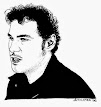
Soumitra Chatterjee’s tense, expressive Amitabha Roy is in a line with Ray’s artist anti-heroes Nawab Wajid Ali Shah and (especially) Uttam Kumar’s sell-out celebrity in Nayak. Like them, Roy begins the movie at a superior remove from the persons around him, but through the course of the plot a flaw’s exposed that puts him at the mercy of the “ordinary” characters, a favorite Ray device. By framing the love triangle within a story about a writer seeking “local color” for his script, Ray's able to explore his pet theme of the artist’s conflicted relationship to society.

The plot turns on Roy’s history with his old flame Karuna (Madhabi Mukherjee), which we get in fragments through a series of moody flashbacks. But it’s the connection between Roy and Karuna’s husband, Gupta, that seems closer to the film’s real interests. Gupta is a balding, pot-bellied, hard-drinking businessman, set up at first as toad to Roy’s prince. Isolated by caste and distance from regular company, Gupta badly needs someone to talk to, while Roy wants (or Gupta assumes he wants) ideas and regional touches for his next script. Gupta quickly offers himself up as a subject for Roy’s film, sharing his troubles and dreams partly out of boredom, partly from drink, but also with the understanding that his life might end up in a movie.

The privileged distance that the artist enjoys from his subject, even a subject as willing as Gupta, quickly begins to vanish. We learn that both studied Economics in college; make money at jobs they find unsatisfying; accept convention—from “boy meets girl” hack work to caste distinctions*—because it makes their lives easier; and feel themselves above the milieu they’re stuck in within the film.

Both are also connected through Karuna, who removes herself from them by a punctilious fulfillment of her role as a prosperous manager's wife. Where Roy and Gupta feel hobbled by the conventions that circumstances have forced them to accept, Karuna gains power by retreating into a type. Consequently, she’s the only character in the film whose inner life we don’t have access to. While this plays into a long tradition of figuring woman as the unknowable Other, it also highlights Ray’s concern with the power in detachment. Like Sharmila Tagore in Nayak, Karuna enjoys a role in the story not unlike that of the director behind the camera. While Roy writes other people's stories for the screen, it's Karuna who gets the final edit over his own.

If we imagine that Kapurush is the film Roy eventually writes, it would mean not so much that he's broken away from from the "boy meets girl" formula of his earlier scripts, but that he's learned how scripted and formulaic his own life has been. His youthful gripes against social norms that he never really found the courage to defy end in the recognition of how much he shares with a vulgar businessman like Gupta, whose own story deserves more sympathy and nuance than Roy's stereotypes allow for. ("You can't know him in a day," chides Karuna, though 24 hours is all the film gives us.)

If Kapurush is Roy's film, it would also mean that the movie doesn’t end with the final scene, but spills off the screen to include our experience of watching it, extending the recursive loop (a film about a screenwriter writing a film) to include us: audience, society, stereotype, and unknowable other all in one.

*which, Gupta tells Roy, aren't Indian, but were left behind by the British.

Tuesday, April 08, 2008

Etude for Theremin

Don't let yourself not stick around for the soul geek climax.

Wednesday, April 02, 2008

Gone East


Off to Maine for this.

Reading reports here and here.

Tuesday, April 01, 2008

Whalen Celebration in Portland, 3/29/08

Saturday’s Whalen celebration at Reed threw a klieg on how many different Whalens you can pull out of his work. There was the clean aphoristic Whalen; the sprawling politico-autobiographical Whalen; Whalen high, Whalen sober; Whalen cranky, Whalen humane; Whalen of the here/now and Whalen of the interglacial Greco-Roman T’ang; Whalen the brain & Whalen the critic of poorly made dinner salads.

A highlight of the night for me was Moshe Lenske’s recollections of postwar Reed and Whalen’s place within it—always in a book, available for any school play, up for talks at his 1414 Lambert Street rental in Sellwood (where Snyder lived for a while in the basement), studying with Blake-drunk pinko campus calligrapher Lloyd Reynolds. (Reynolds’s contribution to the Beat approach to the page, via Reedies Whalen and Snyder, is worth more study. The Zen-leaning English professor-turned-calligrapher used the teaching of the grapheme as “a gateway into the history and lore of civilization,” and his legendary Lefty crankiness could be the model for Whalen’s own. Through another student, Chuck Bigelow, Lloyd’s ideas helped influence the fonts used on Macs.)

Part of the appeal of the Beats for me now is how they reflect an America that’s drifted so from ours it could be a foreign country. Lenske described Reed just after the war as a snug student body of 500-600, studded with returning veterans flush with the G.I. Bill and the social promise of the postwar settlement. Tuition was $300, not a pittance then but low enough that you could hope to pay for the next year’s fees with a decent summer job. Whalen, who grew up in The Dalles (“The End of the Oregon Trail”) 80 miles up the Columbia from here, never turned his back on the Northwest after drifting to San Francisco. He kept up a correspondence with Reynolds and stayed in touch with classmates like Lenske, who was at his ordination as Zen abbot. The Sourdough Mountain Lookout is in Washington, and Lenske described scattering Whalen’s ashes, as per the poet’s instructions, on top of Mt. Hood, which you can see from anywhere in Portland on a clear day.

Hammond Guthrie detailed his hunt for the lost “Crapsey Tea” papers at Reed. Whalen and Lew Welch, whom Guthrie knew at Bolinas in the mid ‘60s, had organized a gag society in the ‘40s called something like the "Adelaide Crapsey-Oswald Spengler Appreciation Society." They printed up ads inviting the public to a series of teas, where the poets (there's no sign the public ever came) picked stanzas from their favorite writers, and brought to the next meeting a poem made with the same words in a new order. Whalen’s insistence that Reed had the “Crapsey stuff” just before he died spurred the Special Collections librarian to track down an unmarked box with 300 pages of Crapsey material. Whalen wrote a “Bouquet to Adelaide” for piano, so the joke—it’s hard to imagine Whalen as a serious Adelaide Crapsey fan—wove faintly through Whalen’s work.

Because the Collected Poems is big, and the reading offered one way through it, here’s a list of what everyone picked to read:

Michael Rothenberg
Sourdough Mountain Lookout (1956)

Rodney Koeneke
Prose Take-out, Portland 13:IX:58
Sauced (1955)
Hymnus ad Patrem Sinensis (1958)

Moshe Lensky
Zenshinji (1974)

Terri Carrion
Bleakness, Farewell (1965)

David Abel
Creation Myth from Prolegomena to a Study of the Universe (1975)
Waste. Profligacy. Fatuity. (1978)
White River Ode (1966)

Hammond Guthrie
To the Muse (1962)
Where Was I? (1963)

Lindsay Hill
Invocation and Theophany (1964)

Kaia Sand
Lemon Trees (1965)
Ode for You (1971)

Pancho Savery
Homage to Robert Creeley (1956)
Sad Song (1965)
The Fourth of October, 1963
"I Told Myself": Bobbie Spontaneously (1971)
Dear Mr. President (1965)

Big thanks to Michael Rothenberg for editing the book and putting together a great night. Jordan Davis has an insightful review of Whalen's Collected up here.